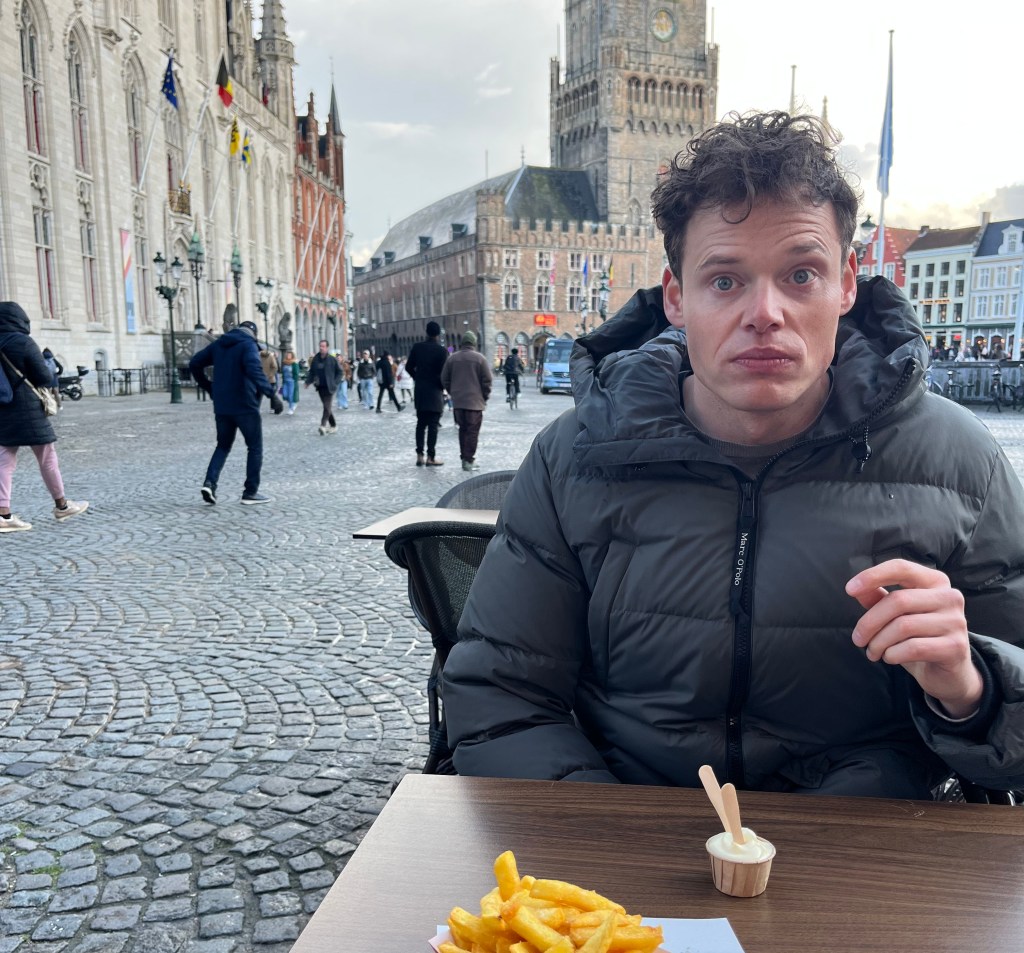
I didn’t start this experiment because I wanted to become some kind of magnetic, grounded, alpha presence.
I started it because I noticed I don’t always look at people.
Not really.
I’d be in a conversation, nodding, responding, thinking of what to say next… but my eyes would drift. To the table. To the ceiling. To my own thoughts.
So I made it simple.
For 30 days, I would maintain eye contact in conversations.
Also when I’m the one speaking.
Especially when I’m the one speaking.
That last part turned out to be the hardest.
The first week: everything felt deeper
The first days were intense.
I remember walking into work and consciously holding eye contact when saying “good morning.” That already felt different. Not dramatic. Just… more direct.
And something strange started happening.
People talked more.
A lot more.
A colleague would start telling a story and instead of wrapping it up, they’d keep going. A woman at a stand told me about her daughter. A guy at the gym suddenly explained his hobby in full detail. The kantinejuffrouw basically unloaded her life story.
I didn’t suddenly become a better interviewer.
I just looked at them.
And apparently that’s rare.
I started noticing how hungry people are to be seen. Not liked. Not impressed. Seen.
That sounds dramatic. It wasn’t. It was subtle. But consistent.
Talking while looking is uncomfortable
Listening while looking? Fine.
Talking while looking? Different game.
The moment I had to think, my eyes wanted to leave. It’s automatic. I’d look away to search for words. Almost like I needed privacy to form a sentence.
Holding eye contact while speaking feels… exposing.
You can’t hide while you’re figuring something out.
That’s when I realized how often I use eye movement as a tiny escape. A micro-exit.
It wasn’t heroic or profound. Just slightly uncomfortable. But interesting.
The body changes too
Something else happened.
Whenever I consciously chose to stay in eye contact, my posture shifted. I’d turn fully toward the person. My shoulders would drop. I’d stand more still.
I felt steadier.
Not dominant. Not bigger. Just less scattered.
There were moments where I didn’t feel the need to impress anymore. Especially in the gym once. I had a conversation with someone where normally I might subtly try to look competent or interesting.
This time I didn’t care.
I was just there.
That felt new.
Sleep matters more than motivation
Then I had a few nights where I slept five hours. Or less.
Everything changed.
Same intention. Same rule. Totally different presence.
I’d notice myself avoiding eye contact. Less intensity. Less patience. Less willingness to stay.
And that annoyed me.
Until I realized: this isn’t mindset. It’s biology.
When you’re tired, your nervous system isn’t stable. You don’t feel as grounded. You’re quicker to withdraw.
I saw the same thing after alcohol. During carnaval the whole experiment basically went overboard.
Which is humbling.
Presence isn’t a personality trait. It’s regulated.
Groups are chaos
One-on-one is powerful.
A group of six people? Good luck.
It turns into visual ping-pong. You can’t anchor to everyone. And if you’re the one speaking and five people are looking at you, that’s another layer entirely.
I felt exposed in those moments. Not in a dramatic way. Just aware.
Interesting how quickly you want to break eye contact when attention is on you.
The uncomfortable part: boredom
Here’s one that surprised me.
I struggled most with eye contact when someone was telling me something I didn’t find interesting.
Not when they were intimidating. Not when I was insecure.
When I was bored.
That was confronting.
It’s easy to be present when you’re fascinated. It’s harder when you’re not.
And then there was another layer.
People started talking a lot. Like… a lot. When you give someone full attention, they often take it. They open up. They go deeper. They keep going.
At some point I noticed I was asking follow-up questions not because I cared that much, but because I saw they liked it.
That’s not connection. That’s pleasing.
So now the experiment wasn’t just about eye contact. It was about boundaries.
Just because someone opens up doesn’t mean I have to keep the door open forever.
Love is different
Halfway through the experiment, I met with a woman who i had deep feelings for.
And that’s a different category.
Eye contact there wasn’t a technique. It was automatic. Intense. Almost too much sometimes.
There were moments where looking at her felt like standing too close to a fire.
That has nothing to do with self-development. That’s just chemistry.
But it did show me something.
Not all eye contact is equal.
Same behavior. Different energy.
The plateau
Around week three, the magic feeling faded.
Conversations didn’t feel extra deep anymore. They felt normal.
For a moment I wondered if the effect was wearing off.
But then I realized something else.
It wasn’t intense anymore because it wasn’t new anymore.
It was becoming default.
I stopped thinking about it all the time. Sometimes I even forgot I was doing an experiment. But when I looked back, I had still held eye contact more than before.
That’s when you know something is integrating.
What actually changed?
Not everything.
I still look away when I’m thinking.
I still lose presence when I’m tired.
I still drift in group settings.
But there’s a difference now.
I notice it.
And more importantly, I know what it feels like to stay.
There’s a very specific feeling when you’re fully in a conversation. Shoulders relaxed. Body turned toward the other person. No rush to speak. No urge to escape.
Just there.
It’s not dramatic. It’s quiet.
But it’s different from half-being-there.
Will I keep doing it?
Not as a rule.
But I can’t unsee what I’ve seen.
Once you’ve experienced the difference between:
looking at someone
and
actually being with someone
it’s hard to go back completely.
And maybe that’s the whole point of these experiments.
Not to become someone else.
Just to stop drifting through conversations without realizing it.
 Bartelblog
Leave a comment